Asphalt Coating in Green Bay, WI
When asphalt is new, it is deep black and slightly flexible. Over a few Wisconsin summers and winters, both qualities fade. Sunlight dries out the binder that holds the stone together, and water works into the surface and freezes. Eventually the pavement loses its color and starts to unravel at the edges. Fam Coatings, LLC applies asphalt coating to driveways and paved areas in Green Bay to slow that process down and bring the surface back to an even, dark finish.
Why Asphalt Wears Out
Asphalt pavement is crushed stone held together by a petroleum-based binder. That binder does two jobs: it keeps the stone locked in place, and it sheds water. Ultraviolet light oxidizes it over time, and so does plain air. Once the binder oxidizes, the surface turns light gray, the small stones near the top start to loosen, and fine cracks appear.
Northeast Wisconsin adds one more stress. Water that gets into those cracks expands when it freezes, and the cycle repeats dozens of times between late fall and spring. Small openings become larger ones, and a driveway that looked tired one year can have real cracking the next.
What a Coat Does for Pavement
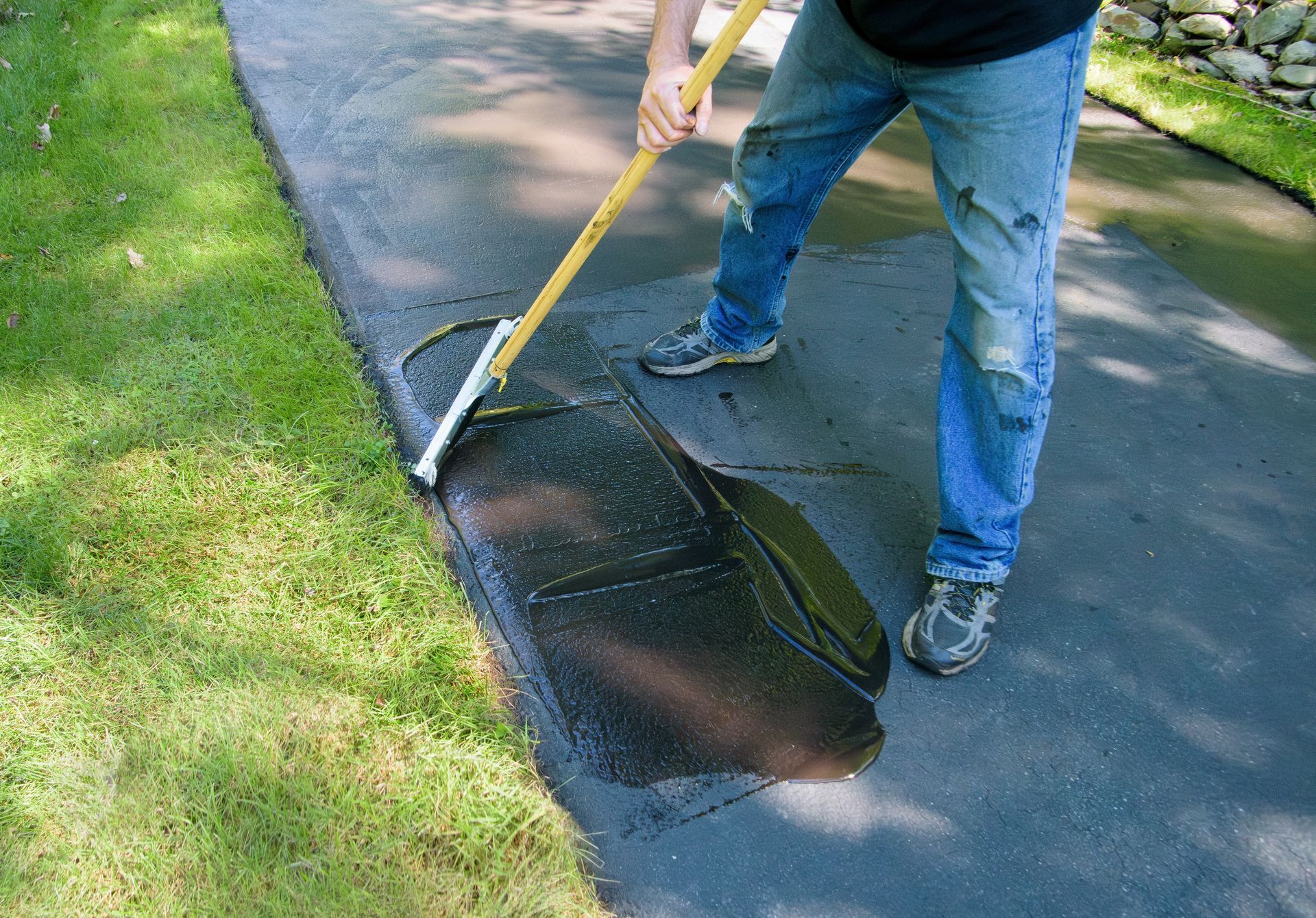
A coating, often called sealcoating, puts a fresh protective layer over the top of the asphalt. That layer takes the sun and weather in place of the pavement underneath. It also fills the surface texture, which helps water run off the surface without soaking into it, and it gives the whole area one uniform color again.
Gasoline, oil, and other petroleum products soften asphalt, so a sealed surface also helps with drips from parked vehicles. The coat does not add structural strength. Its job is protection and appearance, and that is why it pays off most on pavement that is still in reasonably good shape.
Driveways and Paved Areas
Residential driveways are the most familiar job. A refreshed driveway changes how the front of a house looks from the street, and it helps protect a surface that would cost far more to repave than to maintain.
The same logic applies to other paved surfaces around a property: a parking pad beside a garage, a paved path to an outbuilding, or a small lot. Whatever the layout, the quote starts with the size of the area and the condition of the pavement.
Inside and Out
Plenty of properties have worn surfaces both on the pavement and in the garage. If the slab where you park is stained and dusty, see garage floor and slab coating. Fam Coatings also works on indoor surfaces like coated table tops. Everything offered is listed on the Fam Coatings main page.
Local Coverage
Fam Coatings coats asphalt in Green Bay and in communities nearby, including De Pere, Hobart, and Bellevue. If you're not sure your address is close enough, ask.
Frequently Asked Questions
How soon can new asphalt be coated?
Fresh asphalt needs time for its oils to settle and the surface to harden. A common guideline is to wait about 6 to 12 months after paving before applying a coat. If your driveway was paved recently, give the paving date when you ask about it.
Does weather matter for asphalt coating?
Yes. Coatings need dry pavement and mild temperatures to cure properly. A widely used guideline is that the air and the surface should be at least 50 degrees Fahrenheit, with no rain expected for the next day. In this climate, that makes asphalt coating warm-season work.
Will a coating fix cracks in my driveway?
No. A coat goes over the surface and does not fill gaps of any real size. Cracks wider than about a quarter inch usually need to be filled separately. A pattern of connected cracks that looks like alligator skin points to a failing base under the pavement, and coating alone will not solve that.
How often does a driveway need to be recoated?
A common recommendation is every 2 to 3 years. Traffic, sun exposure, and how much salt and plowing the surface sees all change the timing. A driveway that turns gray quickly or sheds loose stone is usually telling you it's due.
Do oil spots need attention before coating?
They do. Petroleum products soften the asphalt and keep a fresh coat from sticking well over that area. Point out any oil spots, especially where a vehicle has been parked in the same place for a long time.